
We are here to help you find the right Commercial Debt Collection Service for your Business
Business-to-business debt recovery is a fundamental activity for firms operating within the United Kingdom.
Continued late settlement of invoices places ongoing pressure on liquidity, particularly for SMEs that depend on regular payment. Systematic collection methods protect profit margins and free management to concentrate on business development rather than unpaid accounts. Understanding the legal framework and practical steps available is essential for any business seeking to recover money owed by other companies.
The Late Payment of Commercial Debts (Interest) Act 1998 provides clear statutory rights for creditors in business-to-business transactions. The Act enables the addition of interest and fixed compensation when invoices are not settled within the agreed period. The provisions operate by default on the majority of contracts involving goods or services unless an alternative rate appears in the agreement. Public authorities face stricter maximum payment periods than private sector businesses.
Interest accrues at a rate of eight per cent above the Bank of England base rate and is calculated daily from the date the debt became overdue. In addition, a fixed compensation sum of forty pounds, seventy pounds or one hundred pounds may be claimed depending on the size of the outstanding invoice. Reasonable further costs of recovery beyond the fixed compensation are also recoverable. These powers equip businesses with an effective means of deterring late payment and recovering the associated administrative expense.
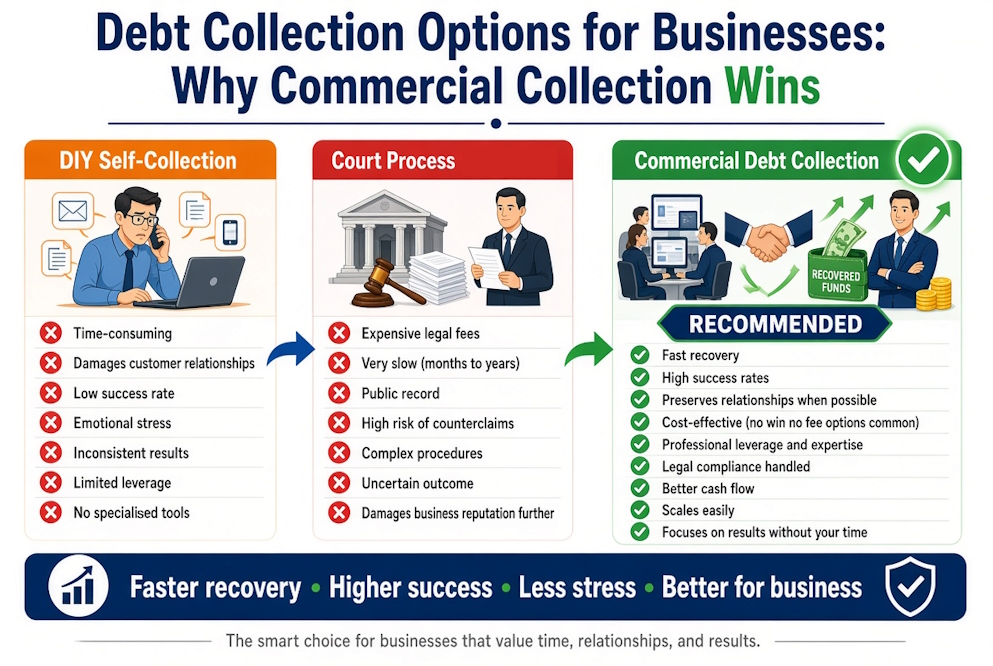
Successful recovery typically opens with resolute yet professional internal credit-control activity.
A courteous reminder should be sent soon after the due date, followed by a stronger formal request if payment has not arrived. Complete records of communications, delivery evidence and contractual terms reinforce any subsequent claim. Prompt action frequently settles accounts before commercial relationships suffer or further costs arise.
When internal efforts fail, a properly drafted Letter Before Action is the next logical step.
Limited companies and limited liability partnerships fall under the Practice Direction on Pre-Action Conduct, which ordinarily allows approximately fourteen days for a reply. The letter must set out the amount owed, the basis of the claim, the deadline for payment and the intention to commence court proceedings if necessary. Reference to statutory interest and compensation increases the incentive for the debtor to settle promptly.
Should the Letter Before Action fail to secure payment, the creditor may issue a county court claim, often through the online Money Claim Online service for straightforward cases.
The defendant normally has fourteen days after service in which to respond. Non-response can lead to a default judgment, while a defence results in further case management. A significant number of debtors prefer to pay once court action is under way rather than incur the costs and exposure of a contested case.

Obtaining a county court judgment is only part of the process
Enforcement is frequently required to secure actual payment. High Court Enforcement Officers can be instructed for judgments exceeding six hundred pounds and enjoy wider powers than county court officers. Other options comprise charging orders over property, third-party debt orders directed at bank accounts and, where suitable, statutory demands that can lead to winding-up petitions. The optimum enforcement method is determined by the debtor’s identifiable assets and solvency.

Professional debt recovery agencies specialising in commercial work offer valuable expertise at this stage.
Reputable organisations operate on a no collection, no commission model whereby the client pays only if recovery is achieved. Agencies supply negotiation skill, knowledge of regional business practices and the ability to escalate efficiently when needed. They also maintain the documentation and regulatory standards expected by the courts.
Choosing an appropriate agency requires examination of past performance, fee clarity and affiliation with recognised professional organisations. A competent firm will evaluate every file thoroughly, provide realistic recovery prospects and maintain regular communication with the client. Numerous businesses conclude that outsourcing recovery liberates internal resources and improves success rates relative to handling every overdue account themselves. Precise contractual arrangements with the agency protect both parties and prevent unforeseen costs.
Ultimately, active credit management together with knowledge of statutory entitlements and escalation pathways produces the strongest outcomes for British firms. Prevention through firm trading terms and prompt invoicing continues to be the primary defence. Once accounts become overdue, prompt specialist intervention maximises recovery while protecting business relationships wherever feasible. Seeking specialist guidance promptly often proves the most efficient means of restoring positive cash flow.